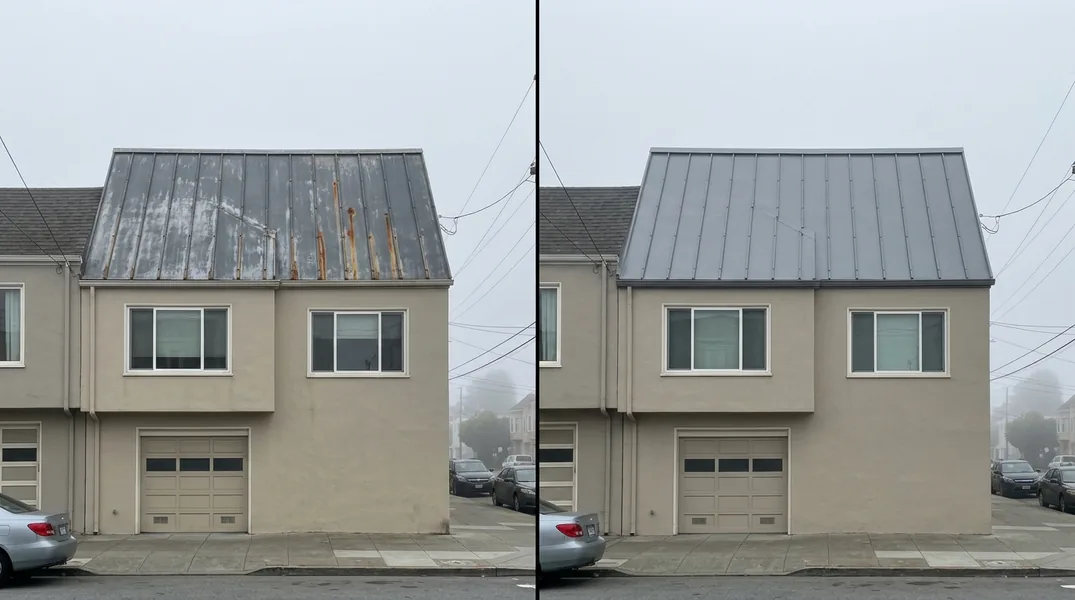
Why Coastal San Francisco Is Tough on Metal Roofs
Living near the Pacific means waking up to fog, watching the marine layer roll over Twin Peaks, and enjoying mild temperatures year round. It also means your roof spends its life in a salt-laden, persistently damp environment. Salt air carries chloride ions that attack unprotected metal, and the near-constant fog keeps roof surfaces wet long enough for corrosion to take hold. Homes in the Sunset, Richmond, and outer neighborhoods feel this most, but the whole city gets a steady dose of ocean air.
That does not mean metal roofing is a bad choice here. Far from it. Metal roofs are among the longest-lasting options available, and they handle wind, rain, and sun exceptionally well. The key is matching the metal and its coating to the coastal environment. A panel that performs beautifully in a dry inland climate can corrode prematurely within a mile or two of the ocean if it is the wrong alloy or has cut edges exposed to salt. Understanding the difference between products is the single most important step in protecting your investment.
Galvalume vs Aluminum Roof: How the Two Metals Compare in Salt Air
Galvalume is steel coated with an aluminum-zinc alloy, and it is one of the most popular roofing materials in the country. Inland, it is an excellent value with strong corrosion resistance and a long track record. Near the Pacific, however, its performance depends heavily on the coating staying intact. Once a panel is cut or scratched, the exposed steel edge becomes a starting point for rust, and salt air accelerates that process. Galvalume can still work in coastal settings when it is installed with care and kept well maintained, but it demands more attention.
Aluminum is the standout choice for salt air. It forms a natural oxide layer that protects itself, and it does not contain steel that can rust at cut edges. That makes an aluminum metal roof coastal-friendly by nature rather than by coating alone. It is lighter than steel, handles marine environments with ease, and holds up well to the foggy, damp conditions that define San Francisco weather. For homeowners within a few miles of the ocean, aluminum is usually the safer long-term bet, even if the upfront material price is a bit higher.
What Metal Roof Corrosion Looks Like and How to Prevent It
Metal roof corrosion rarely appears overnight. It often starts as chalky white deposits, small rust-colored specks, or a dull, uneven finish along panel edges, fastener heads, and seams. On Galvalume, the first warning signs tend to show up at cut edges and around penetrations where the protective coating has been breached. On painted steel panels, you may notice paint blistering or peeling before the metal itself begins to fail. Left alone, these small issues spread, especially in neighborhoods where fog lingers and surfaces stay wet for hours each morning.
Prevention starts at installation. Choosing the right alloy for the environment, specifying corrosion-resistant fasteners, and sealing cut edges properly all make a real difference. Good ventilation under the roof also helps, because trapped moisture is one of corrosion's best friends. Once a roof is in place, a simple annual rinse with fresh water removes salt buildup and extends the life of any metal system. If you are unsure what your current roof is made of or whether it is showing early corrosion, a professional inspection can tell you whether repair, maintenance, or a full Metal Roof Replacement makes the most sense.
Choosing the Right Metal Roof System for Fog and Salt
Material choice is only part of the picture. Panel style and finish matter too. Standing seam systems use concealed fasteners, which means fewer penetrations where water and salt can collect. That makes Standing Seam Metal Roofing a strong fit for coastal homes, especially when paired with aluminum panels and a high-quality paint finish. Homeowners in foggy neighborhoods like the Outer Sunset and the Richmond District often find that this combination delivers the best balance of durability and appearance.
If your home already has asphalt shingles and you are weighing your options, a Metal Roof Over Shingles (Retrofit) can sometimes reduce tear-off costs and disruption. The catch is that the existing roof structure and ventilation need to be assessed carefully, particularly on older homes common in Daly City and Pacifica, where marine air is just as aggressive. A reputable installer will check the deck, flashing, and attic ventilation before recommending a retrofit, and they will be honest if a full tear-off is the better path. For a professional assessment of your specific roof, you can request a free estimate and get clear guidance on which system suits your home.
Metal Roof Installation Near Me: When to Call a Local Pro
Coastal roofing is not a place for guesswork. The difference between a roof that lasts 40 years and one that shows rust in a decade often comes down to small installation details: the alloy selected, how cut edges are treated, the type of fasteners used, and whether the flashing is detailed to shed water away from seams. A local installer who works in salt air conditions every week knows these details and can match the material to your specific microclimate, whether you are a few blocks from Ocean Beach or up in the hills where fog is less persistent.
If your roof is approaching the end of its service life, or if you are planning a Metal Roof Installation and want to get the material right the first time, it pays to talk with a team that specializes in coastal metal roofing. San Francisco Metal Roofing serves homeowners across the city and nearby communities, including South San Francisco. Call (628) 356-4308 to discuss your project, ask about aluminum versus Galvalume for your address, and get straightforward pricing before you commit.
Looking for a professional metal roofing contractor in San Francisco? San Francisco Metal Roofing responds fast for all your metal roofing needs.
Get a Free QuoteOur services: Metal Roof Installation · Standing Seam Metal Roofing · Metal Roof Replacement